


Image Source: unsplash
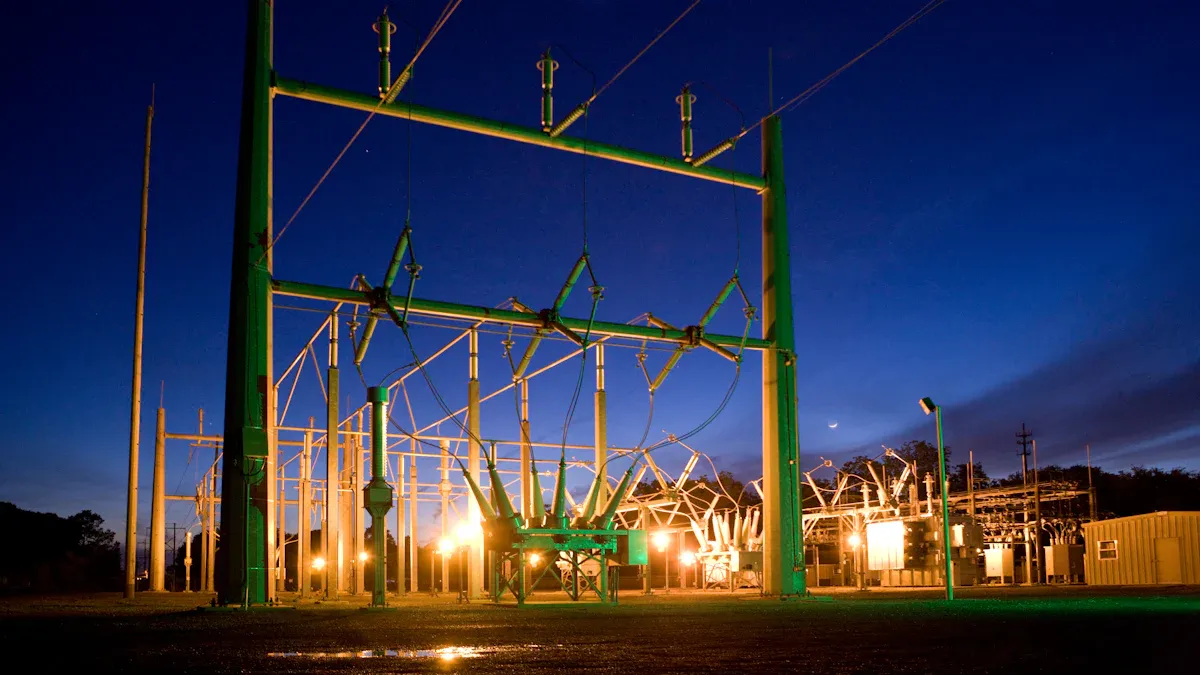
Electrical Substation Design must adhere to IEC and IEEE requirements to guarantee safety, reliability, and regulatory compliance. These standards guide every aspect, from site selection to automation, as shown below:
Ouxu Electric consistently prioritizes innovation and quality, designing products that align with both IEC and IEEE standards across various equipment categories.
Key Takeaways
Understanding IEC and IEEE standards is crucial for safe and reliable electrical substation design.
Adhering to these standards helps reduce operational risks and ensures compliance with local regulations.
Incorporating safety features like robust grounding and secure fencing enhances the safety of substations.
Choosing the right standards based on regional needs streamlines project approvals and reduces costs.
Ouxu Electric's commitment to quality ensures their products meet international standards for safety and performance.
Electrical Substation Design: IEC and IEEE Overview
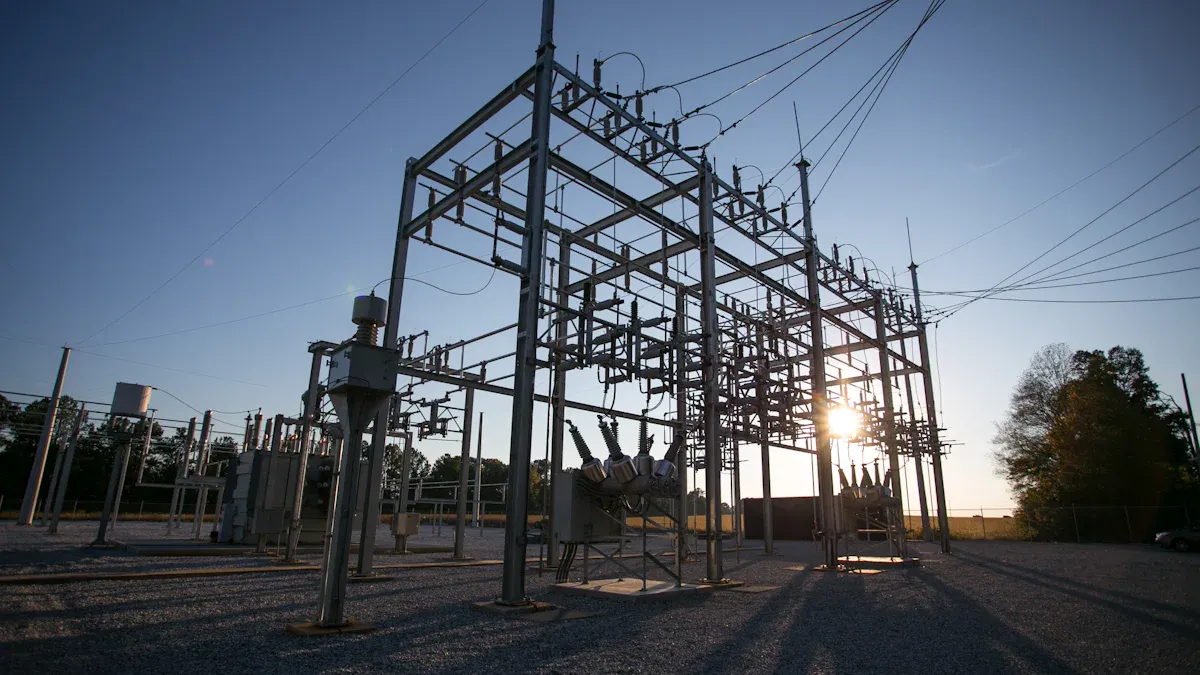
Image Source: unsplash
Electrical Substation Design relies on two primary sets of standards: IEC and IEEE. These frameworks shape the way engineers plan, build, and maintain substations worldwide. IEC standards have broad international adoption, while IEEE standards are more prevalent in the United States and some regions in the Americas. Ouxu Electric serves clients across more than 30 countries, so understanding both systems is essential for delivering compliant and reliable solutions.
IEC Standards Explained
The International Electrotechnical Commission (IEC) develops standards that guide substation design, equipment selection, and system integration. Many countries in South America, Europe, Africa, and Asia use IEC standards as the foundation for their projects. The table below shows how different regions implement these standards:
Key features of IEC standards include:
Guidelines for equipment selection and sizing to ensure safety and reliability.
Standards such as IEC 62271 for high-voltage switchgear, IEC 61850 for communication protocols, and IEC 60038 for standard voltages.
Support for interoperability between devices, streamlined project completion, and simplified future expansions.
IEC 61850 stands out for defining communication between protection and control devices, using protocols like Sampled Values and GOOSE messaging. This standard provides a structured framework for automation and enhances reliability.
IEEE Standards Explained
The Institute of Electrical and Electronics Engineers (IEEE) sets standards widely used in the United States and some international projects. These standards focus on technical requirements for equipment, system integration, and operational safety. The table below highlights some key IEEE standards:
Essential IEEE standards for substation equipment include:
IEEE C57.13-2016 for instrument transformer performance.
IEEE C57.91-2011 for transformer operation beyond nameplate ratings.
IEEE C57.127-2018 for acoustic emission diagnostics.
IEEE C57.13.5-2019 for high voltage instrument transformer testing.
IEEE C57.135-2019 for transformer failure diagnostics.
IEEE C57.1200-2021 for general transformer requirements.
Why Standards Matter
Standards play a critical role in Electrical Substation Design. They address increasing fault current levels and ensure that equipment can withstand mechanical and thermal stresses. Both IEC and IEEE standards guide the design and testing of substation components, helping utilities and developers reduce operational risk and extend asset life.
Increasing fault currents invalidate many historical substation design assumptions. IEEE and IEC standards remain foundational but must be supplemented by advanced analysis, testing, and periodic reassessment. Utilities and developers that proactively address these issues reduce operational risk, extend asset life, and improve regulatory defensibility.
Research shows that IEC 61850 enhances the reliability of substations by supporting safety-related functions and meeting dependability requirements. Adhering to these standards leads to fewer failures and greater system reliability, which is essential for safe and efficient power delivery.
Key Standards for Substation Equipment
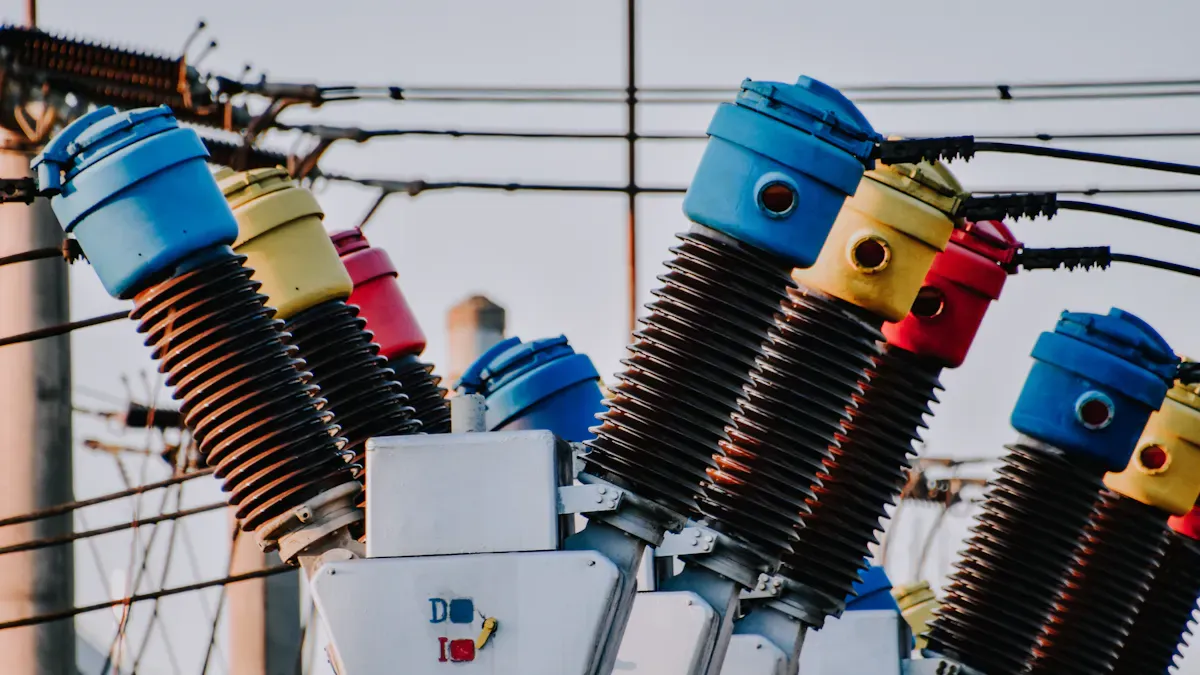
Image Source: pexels
General Design Requirements
General design requirements form the backbone of Electrical Substation Design. These requirements ensure that substations operate safely, efficiently, and reliably in diverse environments. Every substation must include critical safety features such as robust grounding systems, secure fencing, and protective enclosures. These elements prevent unauthorized access and protect personnel from electrical hazards. By integrating these safety measures, substations support safe power delivery and enhance operational efficiency over the long term.
International standards provide a unified framework for these requirements. IEC 61936-1 outlines the general requirements for substations, covering aspects like site layout, insulation coordination, and environmental considerations. IEEE 80 focuses on grounding practices, ensuring that personnel remain safe during fault conditions. Both standards emphasize the importance of clear labeling, emergency access, and fire protection systems.
Note: Adhering to these general design standards not only improves safety but also streamlines project approvals and reduces the risk of costly modifications during construction.
Equipment-Specific Standards
Each piece of substation equipment must meet specific standards to guarantee compatibility, performance, and safety. The following table summarizes key IEC and IEEE standards for major substation components:
Ouxu Electric designs its products to comply with these international standards. The YBW-12/0.4 prefabricated substation, for example, meets IEC 61439 for assemblies, IEC 60947-2 for circuit breakers, and IEC 60364 for electrical installations. The XGN15-12 switchgear aligns with IEC 62271 for medium-voltage switchgear and IEC 60947 for low-voltage components. The KYN61-40.5 switchgear follows IEC 62271 and relevant IEEE C37 standards for high-voltage applications.
Below is a quick reference for Ouxu Electric’s product compliance:
Ouxu Electric adheres to IEC 61850 and IEEE C17.1, which set rigorous guidelines for design, testing, and reliability.
Compliance with these standards minimizes approval delays and reduces the likelihood of issues during grid connection.
Electrical Substation Design benefits from this standards-based approach. By matching equipment to the correct standards, engineers ensure compatibility, simplify maintenance, and support future upgrades. Ouxu Electric’s commitment to international compliance helps customers achieve safe, reliable, and efficient substation projects worldwide.
Ouxu Electric Solutions in Substation Design
Ouxu Electric develops solutions that align with the highest international standards for Electrical Substation Design. The company’s products undergo rigorous testing and certification to ensure safety, reliability, and compliance in every project.
YBW-12/0.4 Prefabricated Substation
The YBW-12/0.4 prefabricated substation stands out for its robust compliance and quality. Ouxu Electric checks every detail before shipping, which reduces errors and ensures consistent performance. The substation meets several key certifications and standards:
The company maintains a 99.8% qualification rate for its products. This high standard demonstrates a strong commitment to reliability and safety. The YBW-12/0.4 substation also features a modular design, quick installation, and advanced protection systems, making it suitable for diverse environments.
XGN15-12 and KYN61-40.5 Switchgear
Ouxu Electric’s XGN15-12 and KYN61-40.5 switchgear offer advanced safety and innovation. Both products comply with IEC 61439, IEC 60947-2, IEC 60364, UL 1558, and NFPA 70E. These standards cover assemblies, circuit breakers, and electrical safety practices.
Arc-proof designs that minimize risks during operation and maintenance.
Automatic interlock systems that prevent human error and enhance operator safety.
Intelligent monitoring capabilities and anti-misoperation features.
Support for frequent operations and large capacity needs.
These switchgear solutions adapt to harsh environments and ensure continuous, reliable power distribution.
Real-World Application Cases
Ouxu Electric’s solutions have proven their value in real-world projects. In a Southeast Asia industrial park, the company provided MV/LV switchgear that met local and international standards, ensuring reliable power for multiple factories. In Europe, a custom transformer solution for an auto parts factory delivered high efficiency and met strict noise and energy regulations. These cases show how Ouxu Electric’s products support safe, efficient, and compliant operations worldwide.
Ouxu Electric’s commitment to quality and compliance helps customers achieve project success, no matter the region or industry.
IEC vs. IEEE: Differences and Similarities
Major Differences
IEC and IEEE standards both play vital roles in Electrical Substation Design, but they differ in several important ways. IEC, or the International Electrotechnical Commission, focuses on creating globally unified standards. Its documents often emphasize broad applicability, making them suitable for international projects. In contrast, IEEE, the Institute of Electrical and Electronics Engineers, centers its work on technical innovation and engineering excellence, with a strong emphasis on detailed technical requirements and best practices.
The scope of IEC standards covers a wide range of electrical equipment and systems, aiming for harmonization across countries. IEEE standards, while comprehensive, often provide more granular technical guidance, especially for North American markets. IEC documents tend to use metric units and international terminology, while IEEE standards may use imperial units and terminology familiar to engineers in the United States.
Ouxu Electric recognizes these differences and ensures that its products, such as switchgear and prefabricated substations, meet the specific requirements of each standard. The company’s engineering team reviews both IEC and IEEE documents during product development, allowing for seamless adaptation to customer needs in different regions.
Key Similarities
Despite their differences, IEC and IEEE standards share several core principles. Both organizations prioritize safety, reliability, and interoperability in substation equipment. Their standards require rigorous testing, clear labeling, and robust protection systems. Both frameworks also address environmental considerations, such as temperature, humidity, and seismic resistance, to ensure equipment performs reliably under various conditions.
Engineers using either standard will find similar approaches to grounding, insulation coordination, and system integration. Both IEC and IEEE promote modular designs and support for automation, which helps utilities and industries upgrade or expand their substations efficiently. Ouxu Electric leverages these similarities to streamline product certification and ensure consistent quality across its global portfolio.
Regional Preferences
Regional adoption of IEC and IEEE standards reflects historical, technical, and regulatory factors. The following table summarizes where each standard is most commonly used:
IEC standards are predominantly used in Europe, Asia, and Africa.
IEEE standards are mainly utilized in North America and parts of South America.
Ouxu Electric adapts its products to meet these regional preferences. For example, the company provides IEC-compliant solutions for projects in Europe and Asia, while offering IEEE-certified equipment for customers in the United States and Latin America. The engineering team works closely with clients to understand local regulations and certification needs, ensuring every product aligns with the required standards. This flexible approach allows Ouxu Electric to deliver reliable, safe, and efficient solutions for Electrical Substation Design in diverse markets.
Applying Standards in Electrical Substation Design
Selecting the Right Standards
Engineers must evaluate several factors when choosing standards for substation projects. They consider site accessibility, environmental impact, and proximity to load centers. Safety and environmental preservation remain top priorities throughout the facility design process. Customization to national and local codes ensures compliance and smooth project approval. For equipment selection, engineers reference IEEE C57 series for transformer reliability and system performance. These standards support diagnostics and regulatory compliance. Other relevant standards include IEEE 80, IEEE 141, and IEEE 1547 for substation equipment, as well as IEC 62271, IEC 61850, and IEC 60038 for high-voltage systems. In some regions, Indian Standards (IS) also guide equipment design and testing.
Tip: Reviewing local regulations and consulting with experienced suppliers like Ouxu Electric helps ensure the correct standards are applied from the start.
Integrating Standards into Design
Successful Electrical Substation Design requires integrating standards at every stage. Engineers match equipment specifications to the chosen standards, ensuring compatibility and safety. They use detailed documentation, including product drawings and test reports, to verify compliance. Ouxu Electric supports this process by providing tailored solutions, bilingual installation manuals, and remote guidance through video conferencing. Their technical team assists with installation, commissioning, and acceptance, helping clients avoid delays and costly errors. For further insights on integrating standards, see Ouxu Electric’s case study on Southeast Asia industrial parks.
Overcoming Challenges
Engineers often face challenges such as system stability, protection coordination, and regulatory compliance. The table below outlines common issues and solutions:
Ouxu Electric addresses these challenges with regular follow-up visits, rapid troubleshooting, and ongoing technical support. Their after-sales service includes monthly or quarterly check-ins, maintenance reminders, and quick responses to quality issues. For more details on Ouxu Electric’s service approach, visit their customer service page.
Understanding IEC and IEEE standards remains essential for effective Electrical Substation Design. Ouxu Electric delivers solutions that help customers achieve compliance, efficiency, and reliability in every project. Their expert team supports clients from planning to after-sales service. For tailored guidance or to explore advanced substation products, contact Ouxu Electric or view their solutions.
FAQ
What is the main difference between IEC and IEEE standards?
IEC standards focus on global harmonization and broad applicability. IEEE standards emphasize technical detail and innovation, especially for North American markets. Both ensure safety and reliability in substation design.
How does Ouxu Electric ensure product compliance with international standards?
Ouxu Electric designs and tests all products according to IEC and IEEE requirements. The engineering team reviews each standard during development. This process guarantees that every product meets the necessary certifications for global markets.
Why is IEC 61850 important for substations?
IEC 61850 standardizes communication between protection and control devices. This protocol supports automation, improves reliability, and enables seamless integration of equipment from different manufacturers.
Can Ouxu Electric customize solutions for specific regional standards?
Yes. Ouxu Electric adapts products to meet local codes and certification needs. The team works closely with clients to ensure compliance with regional standards, such as CE in Europe or TISI in Southeast Asia.
What after-sales support does Ouxu Electric provide for substation projects?
Ouxu Electric offers regular follow-up visits, technical guidance, and maintenance reminders. The service team provides remote support and on-site assistance to ensure smooth installation, commissioning, and long-term operation.