


Image Source: unsplash
Oil Immersed Transformer cooling methods help you manage heat and keep transformers stable in power systems. Cooling methods like ONAN, ONAF, and OFAF use oil and air to remove heat and protect equipment. You prevent overheating, reduce insulation stress, and extend lifespan by choosing the right cooling. Efficient cooling improves reliability and safety. Ouxu Electric leads the industry with innovative transformer designs that boost cooling performance and lower operational costs.
Key Takeaways
Choose the right cooling method to prevent overheating and extend transformer lifespan.
Regularly check oil quality and cooling system components to ensure reliable operation.
Use advanced cooling technologies to improve efficiency and reduce energy costs.
Understand the differences between cooling methods like ONAN, ONAF, and OFAF for better application matching.
Implement preventive maintenance to avoid costly repairs and ensure optimal performance.
Oil Immersed Transformer Cooling Basics
Image Source: pexels
Purpose of Cooling
You need to keep your transformer cool to ensure safe and reliable operation. When an Oil Immersed Transformer works, it generates heat from electrical losses inside the windings and core. If you do not control this heat, the temperature rises quickly. Cooling serves several important purposes:
It prevents overheating, which can cause insulation to break down and lead to transformer failure.
It helps you avoid higher resistive losses, known as I²R losses, that occur when the temperature increases. This keeps your transformer efficient and reduces your energy costs.
It extends the lifespan of your transformer by slowing down the aging of insulation and other parts.
By using effective cooling, you protect your investment and keep your power system running smoothly.
Why Cooling Matters
You face serious risks if you do not cool your Oil Immersed Transformer properly. High temperatures can damage both the oil and the internal components. The table below shows the main risks you might encounter:
You can avoid these problems by choosing the right cooling method and maintaining your transformer regularly. Good cooling keeps your transformer safe, efficient, and reliable.
Cooling System Components
Cooling Oil and Radiators
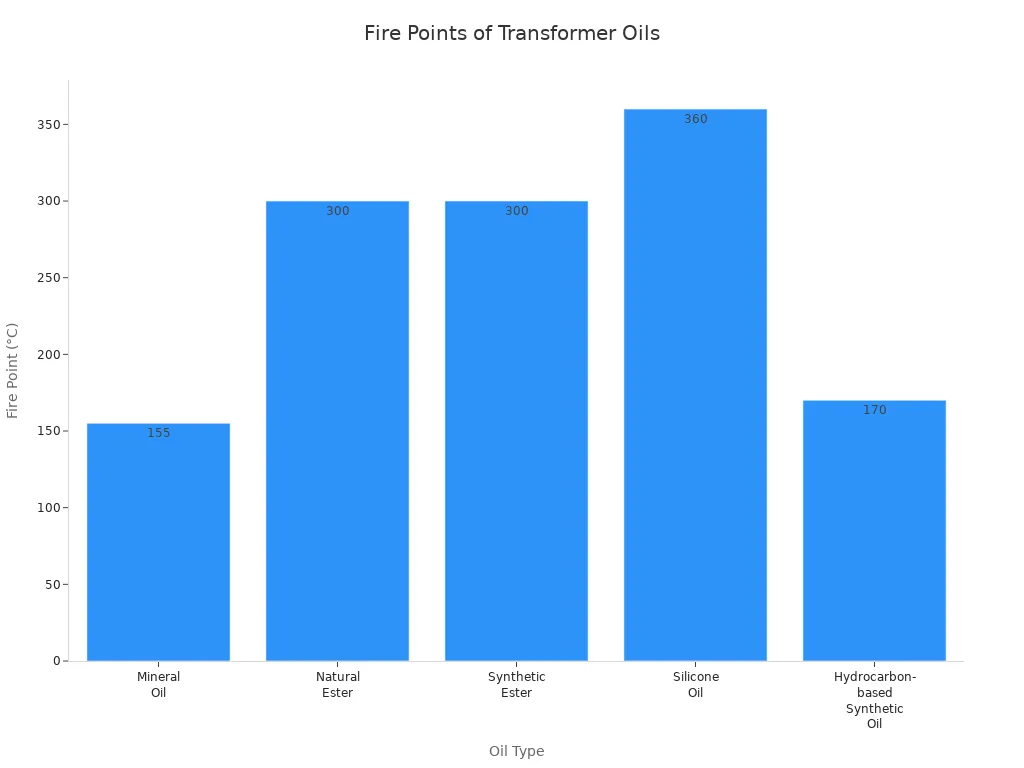
You rely on cooling oil to absorb and transfer heat away from transformer windings and the core. The type of oil you choose affects both safety and performance. Mineral oil is the most common, but you may use natural ester, synthetic ester, silicone oil, or hydrocarbon-based synthetic oil for special needs. Each oil type offers unique thermal properties and environmental benefits.
You see that mineral oil offers reliable cooling and insulation. Natural and synthetic esters provide higher fire points and biodegradability, making them safer for indoor or eco-sensitive installations. Silicone oil stands out for fire safety in critical environments.
Radiators play a key role in cooling. They increase the surface area for heat exchange between oil and air. The design of radiators affects cooling efficiency. For example, ONAN cooling mode delivers a capacity of 27.4 kW with a heat transfer coefficient of 3.9 W/m²K. ODAN mode boosts capacity to 33.0 kW and a coefficient of 4.3 W/m²K. You benefit from improved heat dissipation when you select the right radiator design.
Fans, Pumps, and Controls
You enhance transformer cooling with fans, pumps, and control systems. Fans force air across radiators, increasing heat removal. Pumps circulate oil, improving heat transfer from the windings to the radiators. Control systems monitor temperature and activate cooling devices as needed.
Large transformers use oil pumps to boost heat transfer efficiency.
Proper cooling maintains a temperature drop of 8–15°C across coolers under full load.
Monitoring systems reduce fan energy consumption by up to 67%.
Real-time temperature monitoring extends transformer lifespan by 8–12 years.
You gain reliable performance and energy savings when you use advanced cooling controls. Ouxu Electric integrates intelligent temperature monitoring and automatic cooling in its transformer designs, helping you achieve stable operation and longer service life.
Main Cooling Methods for Oil Immersed Transformers
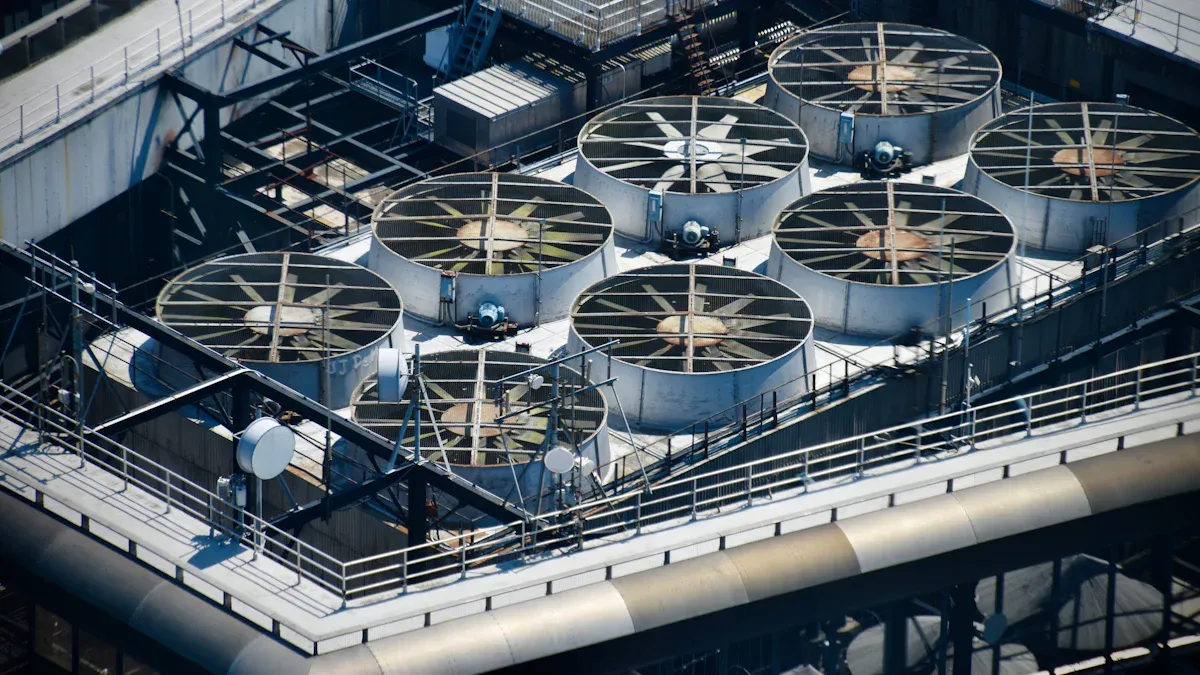
Image Source: unsplash
You have several cooling methods to choose from when managing heat in an Oil Immersed Transformer. Each method uses a different approach to move heat away from the core and windings. Ouxu Electric offers a range of transformers that use these cooling systems, helping you match the right solution to your application.
ONAN (Self-Cooling)
You rely on ONAN cooling for simple and reliable operation. This method uses natural convection to circulate oil and air. Heat from the windings and core warms the oil, which rises and flows through channels and radiators. The oil then cools as it releases heat to the air, and the cycle repeats.
Natural convection moves oil without pumps or fans.
Sealed or conservator-type tanks keep oil clean and stable.
Corrugated tank walls and wide oil channels improve cooling.
You find ONAN in distribution transformers with steady loads and good ventilation.
Ouxu Electric’s Factory 10kV three-phase oil immersed on load tap changer transformer uses ONAN cooling for outdoor and indoor installations. You benefit from a fully sealed design and accurate voltage regulation. Learn more about this product here.
ONAF (Air Forced)
You choose ONAF cooling when you need higher capacity and flexibility. This method combines natural oil circulation with forced air cooling. Fans blow air across radiators, increasing heat removal and allowing the transformer to handle heavier loads.
ONAF supports 25% to 40% more load than ONAN.
Fans activate when temperature rises, keeping operating temperatures lower.
You can manage peak loads and variable demand more easily.
You see ONAF cooling in Ouxu Electric’s 35kV double-winding on-load tap-changing oil-immersed power transformer. This transformer uses intelligent temperature control and automatic fan activation to maintain stable operation. You can find more details here.
Tip: ONAF cooling systems with smart fan controls can reduce cooling energy consumption by up to 15%. You save energy and extend transformer life with real-time monitoring.
OFAF (Oil Forced Air Forced)
You use OFAF cooling for high-capacity transformers in demanding environments. This method uses oil pumps to circulate oil quickly and fans to force air across radiators. You achieve excellent heat dissipation and stable operation under heavy loads.
Oil pumps and fans work together to keep oil top temperature below 55°C.
OFAF cooling supports continuous operation in high ambient temperatures.
You avoid load derating and maintain excellent oil condition over time.
Ouxu Electric’s power transformers for industrial manufacturing, such as those used in automotive parts factories, often feature OFAF cooling. These transformers deliver reliable performance and meet strict noise and efficiency standards. Explore a real-world case here.
OFWF (Oil Forced Water Forced)
You select OFWF cooling for the largest transformers and critical installations. This method uses oil pumps and water coolers to remove heat. Water absorbs heat from the oil and carries it away, providing superior cooling capacity.
You must maintain OFWF systems carefully. Regular oil and water quality testing helps you extend transformer lifespan. In one case, a comprehensive maintenance program increased expected lifespan by 25%. Ouxu Electric’s high-capacity transformers can be customized for OFWF cooling in large substations and energy storage systems.
Advanced and Hybrid Methods
You see advanced cooling methods in modern transformer designs. Hybrid systems combine oil and air cooling with intelligent controls. Sensors monitor temperature and load, activating pumps and fans only when needed. You gain energy savings and improved reliability.
Ouxu Electric integrates advanced cooling technology in its product range. Intelligent temperature monitoring, automatic fan and pump activation, and optimized radiator design help you achieve stable operation and longer service life. You can explore Ouxu Electric’s full transformer lineup here.
Note: Ouxu Electric’s innovations in cooling efficiency and reliability set new standards for transformer performance. You benefit from reduced maintenance costs, extended lifespan, and stable operation in diverse environments.
You can match the right cooling method to your needs by considering transformer size, load profile, and installation environment. Ouxu Electric’s expertise helps you select and maintain the best solution for your power system.
How Cooling Methods Work
Natural Circulation
You see natural circulation as the foundation of cooling in an Oil Immersed Transformer. This method relies on the physical properties of oil and simple convection. The oil absorbs heat from the windings and core. As the oil heats up, it becomes less dense and rises. Cooler oil sinks to the bottom, creating a continuous loop. This movement carries heat to the radiators, where the oil releases energy to the surrounding air.
The oil absorbs heat generated by electrical losses in the transformer windings and core.
Heated oil rises due to natural convection, forming a circulation loop.
Oil travels to radiators, where it releases heat to the air and cools down.
Cooler, denser oil sinks back to the bottom, repeating the cycle.
You benefit from this process because it requires no pumps or fans. The system operates quietly and efficiently under normal load conditions. You find natural circulation in ONAN cooling systems. These systems work best in environments with steady loads and good ventilation.
Tip: You can improve natural circulation by using wider oil channels and corrugated tank walls. These features help oil move smoothly and enhance cooling efficiency.
Forced Circulation
You use forced circulation when you need higher cooling capacity or must handle variable loads. This method adds pumps and fans to the system. Oil pumps move oil faster through the transformer and radiators. Fans blow air across the radiators, increasing heat transfer rates.
You see that forced circulation boosts cooling performance. Under ONAF, cooling fans activate when the temperature rises. These fans increase airflow, helping oil release heat more quickly. Forced Air Cooling improves natural circulation by using fans to blow air over radiators. You achieve higher heat transfer rates and can support heavier loads.
ONAN uses natural oil circulation and air cooling.
ONAF combines natural oil circulation with forced air cooling.
OFWF uses forced oil circulation with water cooling for the highest efficiency.
You find forced circulation in Ouxu Electric’s high-capacity transformers. These transformers use intelligent controls to monitor temperature and activate pumps and fans only when needed. You gain stable operation, energy savings, and extended transformer lifespan.
Note: You should maintain pumps and fans regularly. Proper maintenance ensures reliable cooling and prevents overheating during peak demand.
You can choose between natural and forced circulation based on your transformer’s size, load profile, and installation environment. Ouxu Electric helps you select the best cooling method for your needs, ensuring safe and efficient operation.
Applications and Case Studies
Industrial and Civil Uses
You see Oil Immersed Transformer cooling methods used in many settings. Industrial factories depend on reliable transformers to keep production lines running. Civil infrastructure, such as hospitals and schools, needs stable power for safety and comfort. You can use ONAN cooling in residential areas where noise and maintenance must stay low. ONAF and OFAF cooling methods help you manage heavy loads in manufacturing plants and commercial buildings. Water-cooled systems support large substations and energy storage facilities.
Factories use advanced cooling to handle high demand and variable loads.
Hospitals and data centers rely on stable voltage and efficient cooling for sensitive equipment.
Outdoor installations benefit from sealed designs that resist weather and reduce maintenance.
You can match cooling methods to your environment and needs. Ouxu Electric offers transformers that adapt to harsh climates, tight spaces, and strict noise standards.
Ouxu Electric Solutions in Action
You can learn from real-world examples. In Germany, a European auto parts factory faced space and noise challenges. The factory needed a transformer that fit a small area and met strict noise regulations. Ouxu Electric delivered a custom 1600kVA transformer with OFAF cooling. The compact design saved 35% space. The intelligent temperature control system kept the transformer cool and quiet. The solution helped the factory expand production lines without risking voltage instability.
Note: You can read more about this case here.
Ouxu Electric transformers adapt to different environments. You find products for outdoor, indoor, and eco-sensitive areas. You can explore the Factory 10kV three-phase oil immersed on load tap changer transformer for outdoor use here. You see that Ouxu Electric’s solutions help you meet technical and regulatory requirements while improving reliability and efficiency.
Importance of Efficient Cooling
Performance and Safety
You depend on efficient cooling to keep your transformer running safely and at peak performance. When you manage heat well, you protect the insulation and prevent electrical faults. High temperatures can cause insulation to break down, leading to short circuits or even fires. You avoid these risks by using cooling systems that respond quickly to changes in load and environment. Reliable cooling helps you maintain stable voltage and keeps your equipment safe for workers and nearby communities.
Tip: Regularly check your cooling system for signs of wear or oil degradation. Early detection prevents costly repairs and downtime.
You also notice that efficient cooling reduces noise and vibration. This matters in places like hospitals or schools, where quiet operation is important. Ouxu Electric designs transformers with advanced cooling features that help you meet strict safety and noise standards.
Energy Savings and Longevity
You save energy and extend the life of your transformer when you use advanced cooling methods. Efficient cooling lowers the power needed for fans and pumps. In one shopping mall, a retrofit reduced cooling system power consumption by 35%. You see real benefits in your energy bills.
You cut cooling costs by using smart controls that activate only when needed.
You improve transformer efficiency, allowing longer full-load operation during hot weather.
You extend the service life of your transformer by keeping temperatures stable.
In a solar power plant, transformers improved their operating efficiency from 98.5% to 99.6%. This allowed an extra 4 hours of full-load operation each day in summer. You gain more reliable power and reduce maintenance needs.
You see that efficient cooling is not just about safety. It helps you save money and get more years from your Oil Immersed Transformer.
Maintenance and Challenges
Oil Quality and System Checks
You need to keep your Oil Immersed Transformer in top condition by checking oil quality and cooling system components. Transformer oil acts as both a coolant and an insulator. If the oil degrades, it can cause overheating or electrical faults. You should inspect the oil regularly for color, clarity, and moisture. Testing oil for acidity and dielectric strength helps you spot early signs of trouble. You also need to check cooling parts like radiators, fans, and pumps. Clean radiator fins to prevent dust buildup and keep airflow strong. Look for leaks or cracks in radiators and pipes. Make sure fans and pumps run smoothly. The table below shows key maintenance practices:
Tip: You can extend transformer life by testing oil and inspecting cooling parts every six months.
Preventive Maintenance
You face several challenges when you maintain transformer cooling systems. Blocked radiators or pipes can restrict coolant flow. Pump failures may stop oil circulation. Cooling fans can break or lose efficiency. Faulty sensors or control circuits can cause improper cooling. Oil leaks from seals or gaskets may lead to loss of coolant. Contaminants in the oil can reduce cooling and insulation. Heat exchangers may foul or leak. Control system failures can disrupt cooling. Ambient temperature sensors may give wrong readings. Neglected maintenance can lead to major faults. You can address these issues by following a regular maintenance schedule and using high-quality oil.
Coolant flow obstruction from blocked radiators or pipes
Pump failures due to mechanical or electrical issues
Cooling fan problems from damage or electrical faults
Thermostat or control failures from faulty sensors
Oil leaks from failed seals or gaskets
Cooling medium contamination from dirt or moisture
Heat exchanger malfunctions from fouling or leaks
Fan and pump control problems from relay failures
Ambient temperature sensor failures from incorrect readings
Inadequate maintenance leading to major faults
Note: You can prevent most cooling system problems by inspecting, cleaning, and testing components regularly.
You learned that cooling methods for Oil Immersed Transformer systems play a major role in efficiency, reliability, and safety.
Proper cooling prevents overheating and reduces wear.
Inadequate cooling increases repair costs and raises fire risks.
Cooling methods like natural air, forced air, oil immersion, water cooling, and hybrid systems help you match the right solution to your needs.
Ouxu Electric delivers innovative transformer designs and advanced cooling technologies. You can trust their commitment to quality and customer satisfaction.
Ready to improve your power system?
Contact Ouxu Electric or explore products
FAQ
What is the main purpose of transformer cooling?
You use cooling to remove heat from the transformer. Cooling keeps the insulation safe and prevents overheating. This helps you maintain reliable operation and extend the transformer’s lifespan.
How often should you check transformer oil quality?
You should check transformer oil every six months. Regular testing helps you spot early signs of oil degradation. This keeps your transformer running safely and efficiently.
Which cooling method suits high-load environments best?
You choose OFAF or OFWF cooling for high-load environments. These methods use pumps and fans or water coolers. They provide excellent heat removal and support continuous heavy-duty operation.
Can you use Ouxu Electric transformers in harsh climates?
You can use Ouxu Electric transformers in harsh climates. Their sealed designs and advanced cooling systems adapt to extreme temperatures, humidity, and outdoor conditions.
What are the signs of cooling system problems?
You notice cooling system problems when oil temperature rises, fans or pumps stop working, or you see leaks. Early detection helps you prevent costly repairs and downtime.